· Jacob Simeone · Info · 4 min read
Weather Station Development Updates
What happened to the weather station? What are we working on?
What Happened to the Bradley University Weather Station?
The Bradley University Weather Station survived a long while (~6 months on and off) being deployed outdoors and collected a large amount of data. Some users (if there are any of you out there) may have noticed over the past few months that the station has been down, as has it’s website where we hosted the data.
This problem is multi-faceted. Firstly, the website is hosted on my (Jacob S.) personal server: which underwent some extreme changes to it’s overall hosting setup, prompting me to not want to deal with hosting the weather station app anymore as long as the station is down.
The primary issues with the station itself began around October of 2025: the system was doing well up to that point when suddenly it just died. Some further inspection found that corrosion on sensors, and an unresponsive microcontroller. This was the first critical failure of the system, but far from the only flaw.
Prior to the weather station being taken down, wildly inaccurate readings were being reported due to the un-vented enclosure. Designers drilled many holes into the bottom of the station in an attempt to vent it properly, which largely fixed the issues. However, this was likely what led to humidity and dew entering the enclosure in the morning/evening during large temperature swings, causing the corrosion damage.
Furthermore, the station was very expensive to replace upon this failure. A total re-build of the whole station would mean ordering two types of custom PCBs, a new enclosure, re-print a bunch of parts, and then conformal coat everything. Even then, there was no guarantee the same design would continue working.
All of these factors, and more, resulted in the unfortunate decision to de-commission the station it its current form. This project was one of the most public and fruitful representations of VIP at Bradley University and it pained lots of us to take it down completely, but engineering changes were needed.
But alas: there’s good news! The reason I am writing this post is because some very good progress has been made in the past couple of months.
The Next Station
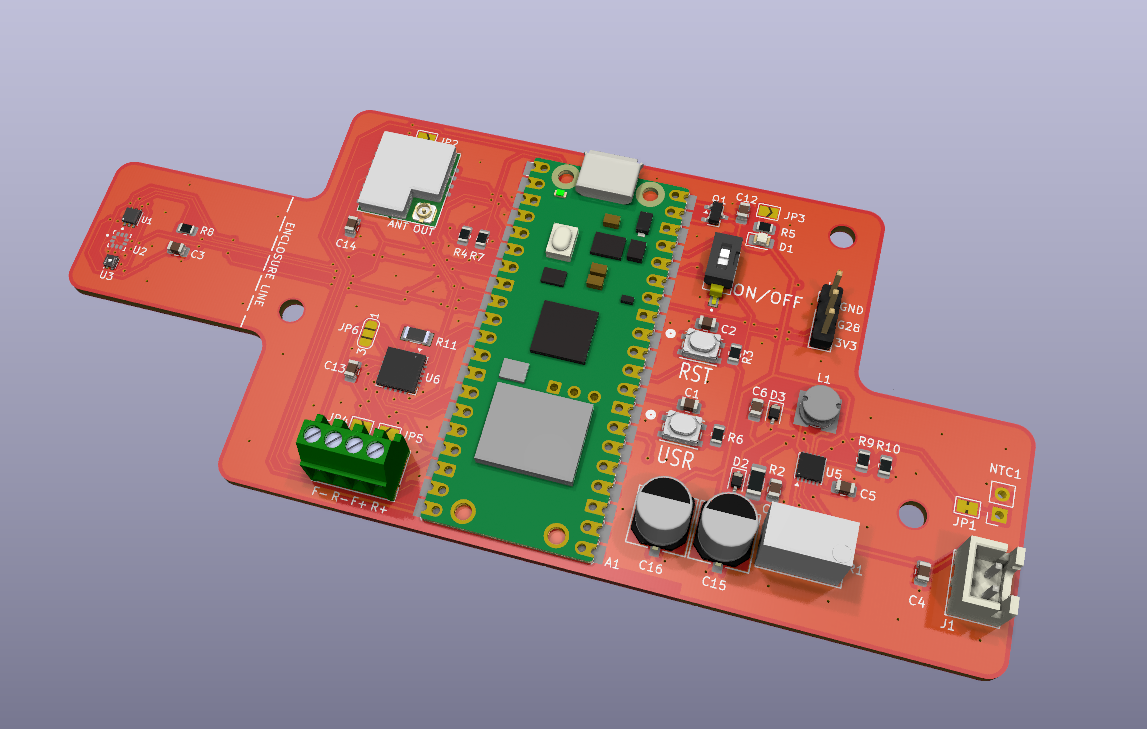
Over the past few months, the maintainer of the weather station has been developing a new version that is completely contained in it’s own PCB with solar charging, sensing, radio, and WiFi all built in to one board. Only the solar panel, battery, and enclosure are needed to complete the system. On top of that all, the whole system should come down in cost significantly by the final revision. Below, you can see an image of the new Layout, captured from KiCad’s PCB designer.
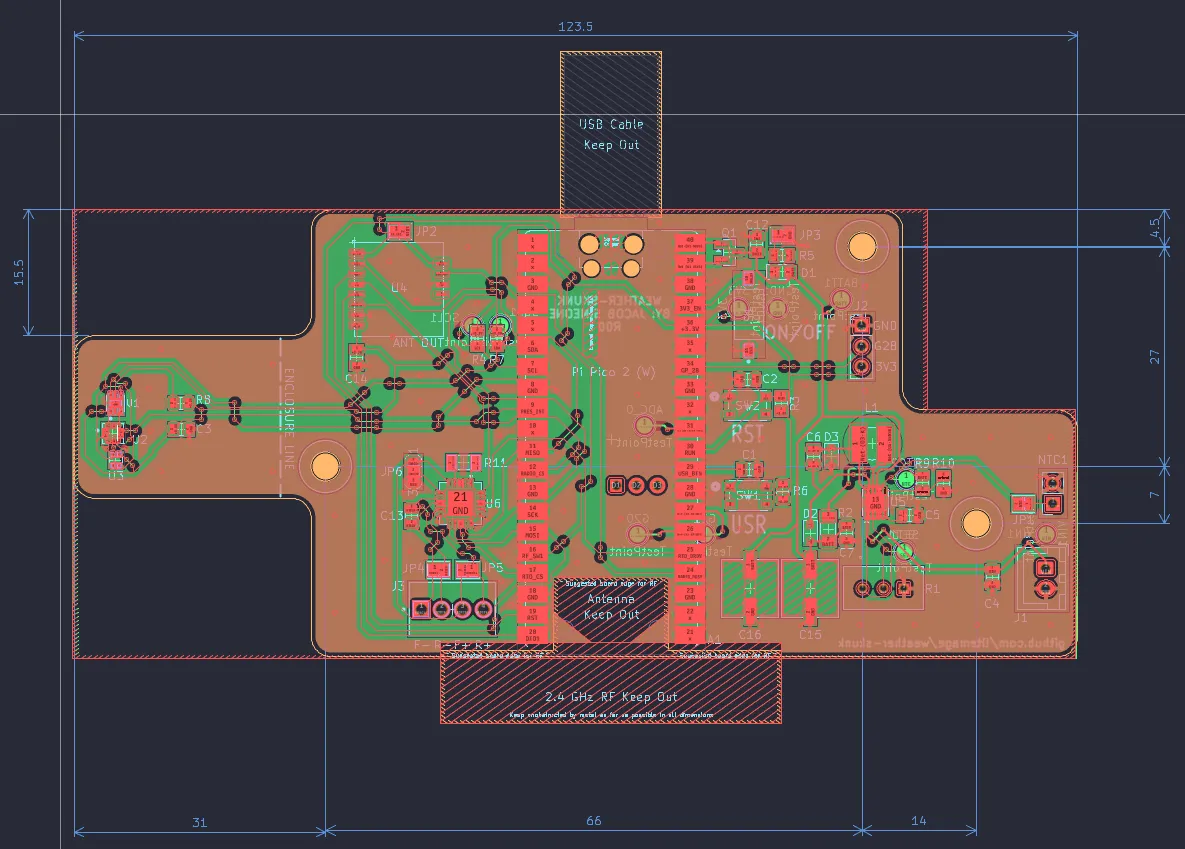
This form factor not only opens up the option for WiFi data acquisition, but also can improve reliability through conformal coating, decreasing connections, and a purpose-built enclosure. The first revision of new boards has already been designed and received, with improvements planned.
At this time, we are comfortable with claiming we can have an operating weather station, at the latest: by Q4 2026 🎉.
A New Name
Because this is an extreme revision, and an entirely different “product” all together, we are also announcing a name change from BU/BECC Weather Station to weather-skunk. Primarily, because the name is a little less boring, and I think they’re cool animals. I mean seriously just look at the little buggers:

What do they have to do with the weather? Probably nothing.
An Aside
Going to switch to full first-person here:
If you read through this post, it’s either because you care about the project and are (somehow) a user of this (up until now, jank) project, or just interested. Either way, from the primary maintainer of the project: thank you for your attention and interest.
And have a good day :)
— Jacob Simeone, the maintainer of the Weather Station